
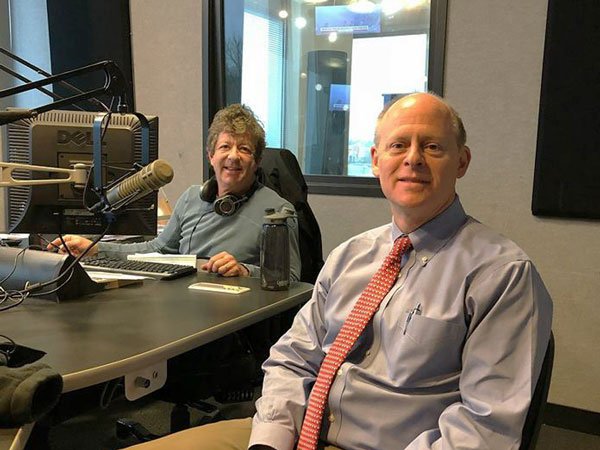
From James H. Essell, MD, Transplant Specialist and Co-Director of Research at OHC
April 9, 2018

James H. Essell, M.D.
Transplant Specialist and Co-Director of Research at OHC
Our immune system doesn’t always know it’s supposed to detect and destroy cancer cells. So what if we were able to somehow teach them to recognize cancer cells and then destroy them without destroying healthy cells? That’s the basic idea behind CAR-T therapy.
And it’s working.
There are two critical messages regarding CAR-T therapy that people in greater Cincinnati should know: First, this emerging treatment is incredibly promising, like nothing before. CAR-T may be the biggest breakthrough since the introduction of chemotherapy. Second, this treatment is going to be available right here in Greater Cincinnati, through the doctors of OHC and The Jewish Hospital — Mercy Health Cincinnati Cancer and Cellular Therapy Center.
Chimeric antigen receptor (CAR) T cell therapy is an emerging form of immunotherapy where doctors remove immune system cells from a patient, modify them in a lab so they will recognize and kill cancer, and then infuse them back into the patient. The cells that are injected back into the patient stay in the body, becoming what some researchers refer to as “living drugs.”
The approach has been to use chemotherapy and radiation to kill the cancer, and we’ve seen great success with that approach. Now we have something that may be even better because we are able to re-train our body’s own immune system cells to recognize mutated cancer cells and destroy them – before they become cancer. And not just once, but in an ongoing state. It’s absolutely fascinating.
The concept of treating cancer cells only (targeted therapy) and not damage healthy cells began in 1977 with the drug tamoxifen. The tamoxifen blocked estrogen receptors on breast cancer cells and the cancer cells died.
In 1997, a human antibody, Rituxan (rituximab), was approved to attach to lymphoma cells. (Antibodies are made by our immune system to remove infections or malignant cells from our body.) This resulted in cells from the patient’s own immune system attacking the lymphoma. These treatments were effective but only as long as the drug or antibody was in the patient’s bloodstream.
In the 1980s, the use of allogeneic stem cell transplant therapy became widespread. (Allogeneic is when a person receives blood-forming stem cells from a genetically similar, but not identical, donor.) This procedure used chemotherapy with or without radiation to destroy malignant cells and replace their immune system with a healthy immune system from a donor. It became clear that it was the new immune system, not the chemotherapy, that helped keep the patient in remission. In patients who relapsed, an infusion of mature immune cells from the donor could result in complete remission and even cure. Unfortunately, these living immune cells can also attack normal cells in the patient.
Using this knowledge led to the development of CAR-T therapy, which uses cells from the patient and genetically modifies them in a lab so they specifically attack cancer cells. These living cells are then infused back in the patient.
The procedure must be performed in a center with an ICU because a potentially fatal immune response can develop as the new immune cells attack the cancer cells. After this initial phase (typically one month), the cells continue to divide and attack the cancer cells. Some patients require several months to achieve a complete remission, and those that are in remission at six months, tend to stay in remission.
Success with CAR-T therapy has also been seen with chronic lymphocytic leukemia (CLL). Studies are ongoing to test CAR-T therapy for glioblastoma, myeloma, renal cell carcinoma and many other cancers. In addition, new CAR-Ts are being developed to link the cell therapy to more than one site on the cancer cell to avoid resistance.
For more information about CAR-T and other clinical trials, call 1-800-710-4674 or contact us here.
Feature Photo: Jim Essell, MD, transplant specialist with OHC, on The Brian Thomas Show telling his listeners about CAR-T therapy.
