
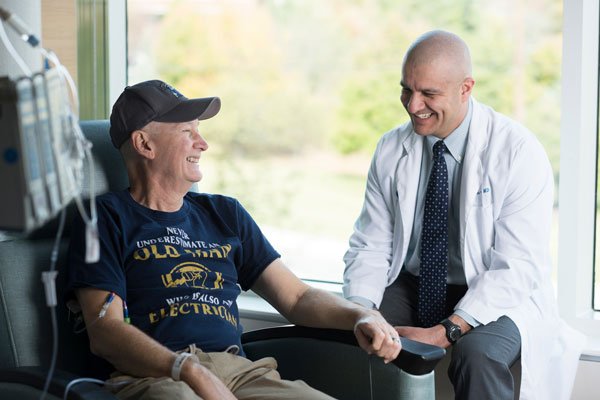
From Patrick John Ward, MD, PhD, co-director of research at OHC
May 1, 2018

Patrick J. Ward, MD, PhD
Co-director of Research at OHC
Thanks to spectacular advances made by cancer research, more than 15.5 million people in the United States and millions more worldwide are surviving cancer. And yet fewer than 1 in 20 adult cancer patients enroll in cancer research or clinical trials.
A great deal of research is done long before a treatment is available to people. And clinical trials follow strict scientific standards, called protocols, which protect patients and help produce reliable study results. Yet people still think of a clinical trial as a last-ditch effort or that they are guinea pigs. As part of National Cancer Research Month, we want to encourage patients to instead think about a clinical trial when they are first diagnosed, not later in the process.
Take, for example, a patient of my colleague Suzanne Partridge, MD, a medical oncologist with OHC. Her patient had a mutant gene that causes lung cancer. Dr. Partridge told him about a clinical trial testing a medication that targeted the mutant gene. The patient told us that within eight hours of starting the medication, he already felt different. So far, he has experienced no side effects and his oxygen level is back to where it should be.
“I recommend everyone participate in a clinical trial if they can. OHC told me if this had happened six years ago, my only option would have been chemo. And now, because of their care and the trial, I get to take this pill. This magic pill.”
Another example is one of my patients who was diagnosed with breast cancer. After her initial treatment was finished, she was still at-risk as the breast cancer could spread to other parts of the body. I explained that she was a candidate for a clinical trial with a new treatment that could prevent the cancer from spreading to her bones, a common target.
“My family and I spent a long time discussing it with Dr. Ward and researching it,” she shared. “After reading research articles and other information, I went forward with the cutting-edge treatment. I’m just living and loving life.”
Without clinical research, or clinical trials, there would be no opportunity to test new, potentially life saving treatments, like CAR T-cell immunotherapy, which may become one of the biggest breakthroughs since chemotherapy.
CAR T-cell therapy is like nothing before. Doctors remove immune system cells from a patient, modify them in a lab so they will recognize and kill cancer, and then inject the cells through an IV back into the patient. This ground-breaking treatment is the result of clinical research led by Carl H. June, MD, and will soon be available through OHC.
All of the current treatments all started in clinical trials. Tamoxofin, Opdivo, Keytruda were once promising new treatments that patients got to use as part of a clinical trial. Many patients are in remission thanks to cancer research. Families are still together thanks to cancer research. People are alive thanks to cancer research. I encourage you or your loved one with cancer to ask your doctor about available clinical trials, or call OHC at 1-800-710-4674 or visit our clinical trials page here.
