
From Comments by John Sacco, MD, a radiation oncologist with OHC who is also board certified in integrative and holistic medicine. Article by Ana Sandoiu, Medical News Today
October 17, 2018

New research shows that a diet rich in marine omega-3 fatty acids slows the growth and spread of breast cancer cells in female mice. The diet enriched with omega-3 also improved the rodents’ survival.
A vast body of research hails the benefits of a diet rich in omega-3 fatty acids. These healthful fats are found in fish, seafood, nuts, and seeds, as well as in fish oil, plant oils, and some fortified foods. For example, an extensive study of almost half a million people, which lasted around 16 years, recently found that eating more fish and long-chain omega-3s reduces the risk of death and may prolong life.
“We know from other studies that omega-3s have numerous benefits,” said John Sacco, MD, a radiation oncologist with OHC who is also board certified in integrative and holistic medicine. “This includes improved cardiovascular health and cognitive function, decreased anxiety and depression, fewer symptoms of ADHD, and improved mental health. Now this study may add breast cancer to the list.”
Emerging research has explored the link between omega-3s and cancer. Observational studies have linked diets rich in marine omega-3 fatty acids with a lower risk of breast cancer. Some molecular studies have suggested that omega-3s may stop cancer by activating the body’s natural pain-killers. Now, experiments in mice add to the mounting evidence that dietary omega-3s may have cancer-fighting properties.
Fatty acids, such as the ones found in fish oil, could prevent breast cancer cells from growing and spreading, suggests a new paper published in the Journal of Mammary Gland Biology and Neoplasia.
Saraswoti Khadge, a former doctoral researcher in the laboratory of James Talmadge, a professor of pathology and microbiology at the University of Nebraska Medical Center in Omaha, led the new research. Khadge and team fed two groups of adult female rodents nearly identical diets. However, the main difference was that one group ate a diet rich in olive oil-derived omega-6 polyunsaturated fats, whereas the other group received food containing omega-3-rich fish oil. Then, the researchers injected the mice with 4T1 breast cancer cells, which cause tumors to spread quickly to the breast glands. Furthermore, 4T1 cells can spontaneously migrate to other sites, such as bones, the lungs, and the liver.
After 35 days, the researchers learned:
- In the rodents that received fish oil, the breast cancer cells were “significantly” less likely to have spread to the breast glands.
- The tumors that did develop in the breast glands also grew a lot more slowly, which affected their size. Specifically, breast gland tumors in the omega-3 group were 50 percent smaller than those in the omega-6 group.
- Cancer cells were less likely to spread to other parts of the body in the omega-3 group, and these rodents also had better survival rates.
Interestingly, the tissues of the omega-3 mice revealed more T cells than those of their omega-6 counterparts. T cells are anti-inflammatory white blood cells that play a crucial role in keeping the immune system strong and healthy. So, the lead researcher hypothesizes that a diet rich in fish oil may prevent the spread of tumors by curbing the inflammation that underlies metastasis.
“This research is so fascinating that I’m not sure which finding I’m more excited about,” added Dr. Sacco. “The fact that the omega 3 diet resulted in smaller tumors that grew and spread more slowly or that the mice had more T cells. T cells are found in our body’s immune system. Their job is to protect us from disease, so the more we have, the better chance they can work to fight cancer cells.”
Khadge says the study emphasizes the potential therapeutic role of dietary long-chain omega-3 fatty acids in the control of tumor growth and metastasis. However, it does not mean that the diet would also prevent breast cancer from forming in the first place.
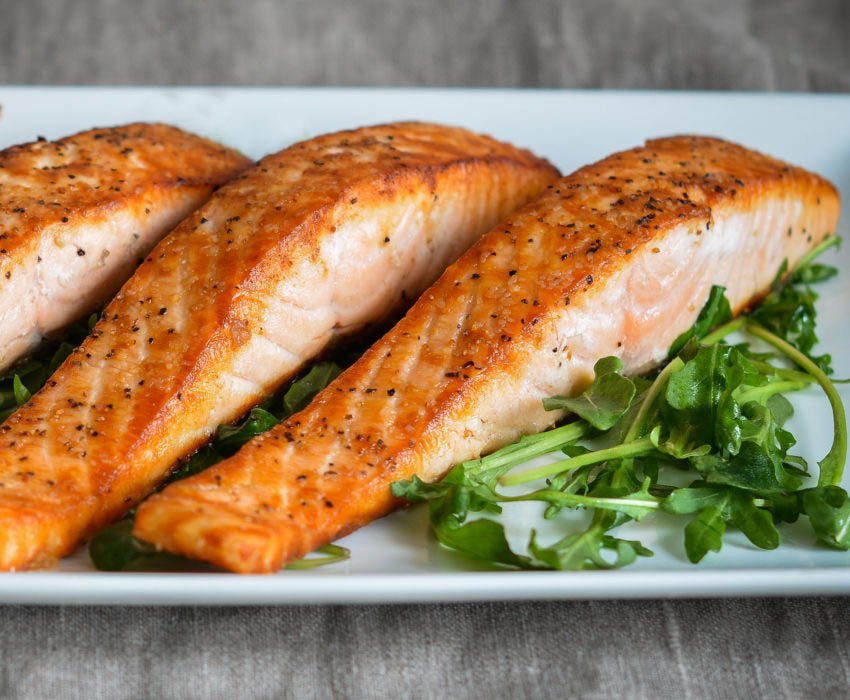
Image: Restaurant-style pan-seared salmon by Jenn Segal, Classically Trained Chef, Cookbook Author and busy mom. Recipe: https://www.onceuponachef.com/recipes/restaurant-style-pan-seared-salmon.html
