
From OHC
July 25, 2024
Aplastic Anemia (AA), a subtype of anemia, is a severe condition in which a person’s bone marrow cannot make enough new blood cells for the body to work properly. The cause of this disease is most commonly due to damaged stem cells which have likely been attacked by the person’s own immune system. Other causes may be toxic medications or exposure to toxins and/or chemicals in the environment. One of the most common treatments for this condition is a bone marrow transplant.
OHC has a strong relationship with NMDP, the national registry for volunteers willing to offer their life-saving blood and marrow to those suffering from blood disorders. NMDP provides funding for research, patient support, and education in order to share their message, along with encouraging eligible volunteers to join the registry. Many volunteers may never even be called during their time on the registry, but for those who do, the call to save a life, a stranger they may never meet, is unlike anything else.

In 2017, OHC patient Nancy Grimshaw kept finding bruises on her body that she didn’t remember how they happened. “I showed my sister a photo of my legs bruised up and she told me I should get a blood test done just in case,” says Nancy. She visited her primary care physician and a blood test revealed extremely low platelets. Nancy was referred to OHC hematologist and medical oncologist James H. Essell, MD. Dr. Essell examined Nancy and after many tests, she was diagnosed with an incredibly rare condition called acquired amegakaryocytic thrombocytopenia (AAMT).
“AAMT is a rare bone marrow disorder characterized by severely low platelet counts in the blood. It’s hard to diagnose because of its rarity. The severely low platelets require immediate therapy. She was initially treated with eltrombopag until a donor could be found. Unfortunately, she converted to aplastic anemia. This condition affects all blood stem cells and thus her body quit producing all blood cells. She then underwent a matched unrelated stem cell transplant,” explains Dr. Essell.
After several failed donor matches, NMDP found Dr. Christoph Glotzbach in Germany. “Christoph traveled to a bigger city to have his donation completed, then it was shipped here and I had my transplant in October of 2019,” says Nancy.
Dr. Essell adds, “After the transplant, Nancy is currently doing well.”
NMDP requires a minimum amount of time before donors and recipients can get the others’ information. Both participants must consent to sharing their contact information with the other. Luckily, Nancy and Christoph were both willing to meet. Nancy, a frequent traveler thanks to her job as a flight attendant with Delta, made the trip to Germany with her husband. There she met the man who helped save her life.
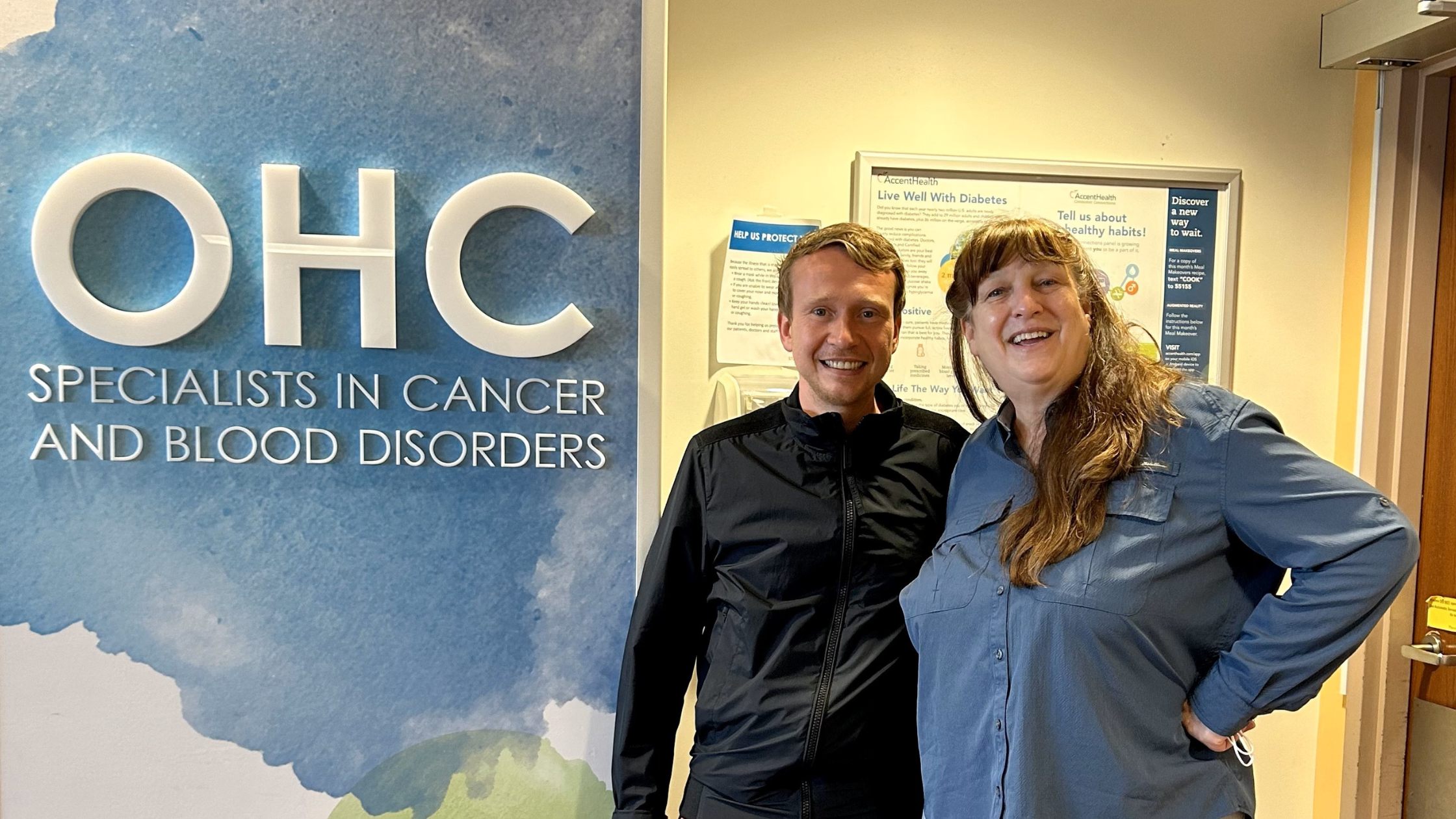
Since then, Nancy and Christoph had kept in touch and this summer Christoph had a business trip to the Cincinnati area, which meant they were able to meet again. This time, Nancy brought him to the place that saved her life, OHC and The Jewish Hospital-Mercy Health. Nancy enjoyed introducing Christoph to the nurses and doctors who treated her before and after her transplant.
When speaking with Nancy about OHC, she is in awe of those who treated her. “Who better to be around when you’re sick than these caring people. They care so much about the people they are treating and you’re in the very best place possible,” adds Nancy.
Nancy is grateful not only to OHC but to Christoph and NMDP to helping her find her match and providing her with a chance to beat her illness. She once joked with Dr. Essell about playing the lottery because of her rare condition, and he said, “You’ve already won the lottery, you’re here, you had a good donor, and you’re still alive.” Nancy agreed, “You can’t argue with that.”
To join the NMDP registry, visit www.nmdp.org. To learn more about the groundbreaking OHC blood cancer doctors and bone marrow transplant specialists, visit ohcare.com.
