
From Comments by John F. Sacco, MD, a radiation oncologist with OHC who is also board certified in Integrative and Holistic Medicine. Original article by Honor Whiteman, Medical News Today, January 29, 2018
February 1, 2018

John F. Sacco, MD
Radiation Oncologist with OHC
Study suggests that women could reap the rewards of EPA and DHA omega-3s by consuming two to three servings of fatty fish per week to combat a highly aggressive form of breast cancer.
When it comes to breast cancer prevention, studies have shown that increasing the intake of omega-3 fatty acids can help. New research, however, indicates that certain types of omega-3 may be more effective than others.
Omega-3s from fish are better than plant-based omega-3 for preventing the development of breast tumors, say researchers. Scientists at the University of Guelph in Ontario, Canada, have revealed that omega-3 fatty acids derived from fish oil may be around eight times more effective for halting the development of aggressive breast cancer tumors than those from plant-based sources. Study co-author Professor David Ma, Department of Human Health and Nutritional Sciences at the University of Guelph, and colleagues recently reported their findings in the Journal of Nutritional Biochemistry.
After skin cancer, breast cancer is the most common cancer among women in the United States. It is expected that around 266,120 new cases of invasive breast cancer will be diagnosed in the U.S. this year, and around 40,920 women will die from the disease.
One of the most aggressive types of breast cancer is HER2-positive breast cancer, wherein breast tumors contain increased levels of the human epidermal growth factor receptor 2 (HER2) protein, which promotes the growth of breast cancer cells. Around 25 percent of breast cancers are HER2-positive.
Previous research has found that omega-3 fatty acids may stave off breast cancer development, but are certain types of omega-3 more effective than others? Prof. Ma and colleagues wanted to find out.
“We’ve said for years that for good health, Americans need to eat more foods containing omega-3,” said John F. Sacco, MD, a radiation oncologist with OHC who is also board certified in Integrative and Holistic Medicine. “What’s interesting about this study is that they set out to determine if there is a beneficial difference among the omega-3s and if so, which one is most beneficial.”
There are two types of omega-3 fatty acids found in fish oil: one is eicosapentaenoic acid (EPA) and the other is docosahexaenoic acid (DHA). The third type of omega-3 is the plant-based a-linolenic acid (ALA), which is found in soy, canola oil, and flaxseed.
For their study, Prof. Ma and colleagues compared the effects of these three types of omega-3 on breast tumor development in mice that were bred to develop HER2-positive breast cancer.
“This study is the first to compare the cancer-fighting potency of plant- versus marine-derived omega-3s on breast tumor development,” says Prof. Ma. “There is evidence that both omega-3s from plants and marine sources are protective against cancer and we wanted to determine which form is more effective.”
Each mouse was exposed to one of the three different omega-3s from before birth, which allowed the researchers to get a better idea of how the fatty acids impact tumor development. The team found that mice exposed to the fish oil-derived omega-3s EPA and DHA experienced a 60–70 percent reduction in tumor size, as well as a 30 percent decrease in the number of breast tumors. The same doses of plant-based ALA did not have the same impact against breast cancer tumors as EPA and DHA. To get the same effect, the mice had to be exposed to much higher doses of ALA.
Overall, the team found that EPA and DHA were eight times more effective at preventing the development of breast cancer tumors than ALA.
Prof. Ma and team explain that omega-3 fatty acids can prevent cancer development by activating specific genes that aid immune system function, which inhibits pathways responsible for tumor growth. Based on their results, the researchers suggest that EPA and DHA are the best omega-3 fatty acids for this protective effect.
What is more, the doses used in their study suggest that women could reap the rewards of EPA and DHA by consuming two to three servings of fatty fish — such as salmon, tuna, and trout — per week. “Personally, I stay away from tuna because of environmental pollutants. Safest are Alaskan salmon, sardines, cod and anchovies,” added Dr. Sacco.
“In North America, we don’t get enough omega-3s from seafood, so there lies an opportunity to improve our diet and help prevent the risk of breast cancer.”
Prof. Ma adds that eggs and fish oil supplements are also good sources of DHA.
In future research, the team plans to investigate how the three omega-3 fatty acids affect the development of other breast cancer types.
“Seeing the significant benefits omega-3s can have in combatting a highly aggressive form of breast cancer,” explains Prof. Ma, “means omega-3s will likely be beneficial for other types of cancer.”
Dr. Sacco warns that “no single food can prevent or fight cancer on its own, so aim for a plate of food that is at least two-thirds whole grains, vegetables, beans, or fruit. Dairy products, fish, and meat should take up no more than a third of your plate.”
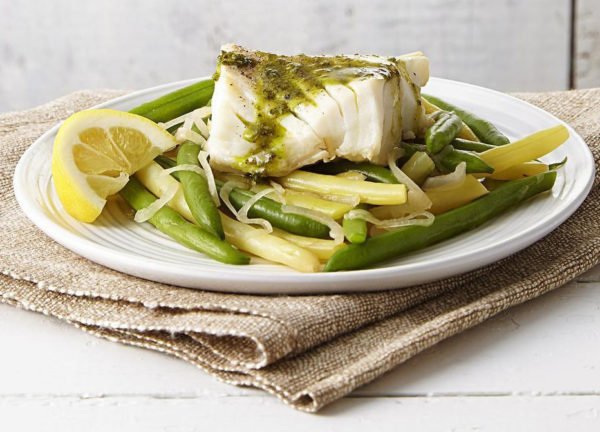
Pictured above: Poached Cod & Green Beans with Pesto
Prep: 20 minutes
Ready In: 20 minutes
Recipe By: EatingWell Test Kitchen
“Using just one skillet, this easy fish recipe cooks cod right on top of fresh green beans and uses the same pan to make a flavorful sauce. The result is perfectly flaky fish, tender-crisp vegetables, a savory pan sauce and very little cleanup.”
Ingredients
1 tablespoon extra-virgin olive oil
1 pound green and/or yellow wax beans, trimmed
¾ cup thinly sliced shallot
1¼ pounds cod (see Tip), cut into 4 portions
¼ teaspoon salt
¼ teaspoon freshly ground pepper
1½ cups low-sodium chicken broth or “no-chicken” broth
¼ cup prepared pesto
Lemon wedges for serving
Directions
- Heat oil in a large skillet over medium-high heat. Add beans and shallot and cook, stirring occasionally, until the shallot starts to soften, 1 to 2 minutes.
- Sprinkle both sides of cod with salt and pepper. Spread the beans into a flat layer in the pan and gently place the cod on top. Increase heat to high, add broth, cover and cook until the fish is just cooked through, 4 to 6 minutes.
- With a slotted spoon, transfer the cod and beans to a large serving plate or divide among 4 dinner plates; cover to keep warm. Cook the broth over high heat, uncovered, until reduced to about ½ cup, about 5 minutes. Remove from heat and stir in pesto. Pour the sauce over the fish and beans and serve with lemon wedges, if desired.
Nutrition Information
Serving size: 4 oz. cod, 1¼ cups beans and 2 Tbsp. sauce
Per serving: 264 calories; 12 g fat(3 g sat); 4 g fiber; 15 g carbohydrates; 26 g protein; 55 mcg folate; 61 mg cholesterol; 5 g sugars; 0 g added sugars; 1,292 IU vitamin A; 17 mg vitamin C; 177 mg calcium; 2 mg iron; 371 mg sodium; 747 mg potassium
Nutrition Bonus: Vitamin C (28% daily value), Vitamin A (26% dv)
Carbohydrate Servings: 1
Exchanges: 2½ vegetable, 2½ lean meat, 2 fat
